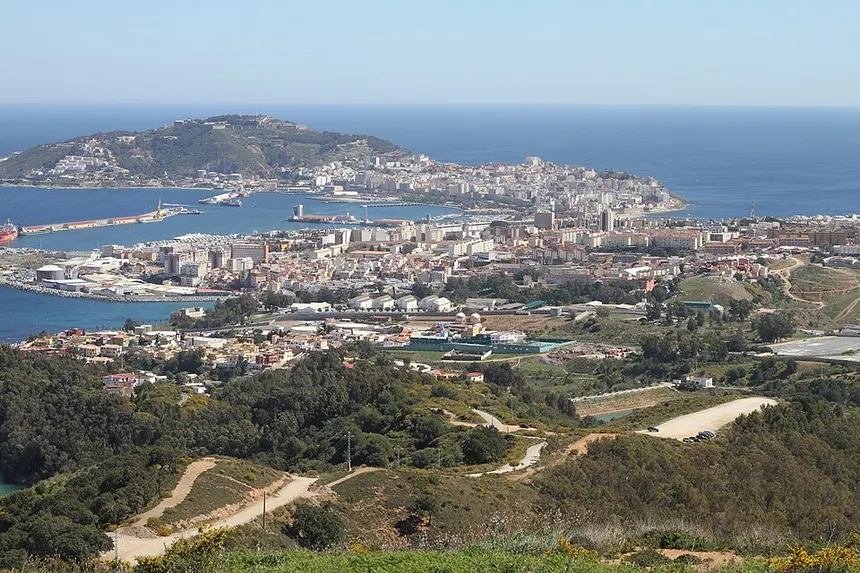
On 30 and 31 July, tens of thousands of people crossed the border into Ceuta irregularly. Ceuta is a city of around 80,000 inhabitants. This is what happened, with figures and their sources, and what the situation is like in Ceuta today.
On 30 and 31 July 2026, a mass irregular entry took place across Ceuta's border: tens of thousands of people crossed into a Spanish city of around 80,000 inhabitants. Most returned to Morocco in the days that followed, but thousands remain in the city, many living in overcrowded conditions. Irregular migration, pressure on healthcare services and the loss of normality are now affecting everyday life in Ceuta. Below is a step-by-step account of what happened, with figures and their sources.
01 · 30 AND 31 JULY
An unprecedented mass entry
In the space of just two days, tens of thousands of people crossed Ceuta's border perimeter irregularly. Nothing on this scale had ever happened before in a Spanish city.
The figures vary depending on the source and are still being updated, but all point to an order of magnitude with no comparison in the recent history of Europe's southern border.
~80,000
People who entered Ceuta irregularly on 30 and 31 July.
Source: Estimates reported by various sources; the official figure from the Spanish Ministry of the Interior is lower and is still being revised.
2 days
Duration of the mass entry, which overwhelmed all the contingency measures that had been put in place.
Source: Chronology of events on 30 and 31 July.
Por Ceuta's position
We regard what happened as a de facto invasion of the Spanish and European border. This is a political and civic assessment of the seriousness of the events, not a legal classification.
02 · THE MOST IMPORTANT THING
The human tragedy
Behind every figure is a human being. Families were torn apart, children were left on their own, people were driven into a desperate exodus, and dozens of people died on both sides of the border.
The figures differ and are still being updated. No single number can convey what happened: the names of those who are missing tell the story.
141
People who died on both sides of the border.
Source: Caminando Fronteras. The number confirmed by the authorities is lower and is still being updated.
82
Bodies recovered on the Spanish side.
Source: Reuters.
14
Deaths reported by Morocco.
Source: Reuters.
Por Ceuta's position
We believe that the actions and failures of the Moroccan authorities played a decisive role in pushing tens of thousands of people into a situation that ultimately ended in tragedy. The Spanish Government, for its part, has attributed a significant part of the crisis to human-trafficking networks and their exploitation of social media.
03 · AFTER THE SURGE
Thousands returned, but the crisis remained in Ceuta
The vast majority of those who crossed returned to Morocco in the days that followed. But thousands of people are still in the city, with no clear destination and no system capable of providing them with dignified conditions.
Ceuta has a population of around 80,000. The emergency that remains represents a huge proportion of the city's own population.
7,000–10,000
People currently estimated to remain in Ceuta.
Source: Estimates currently circulating; official figures have varied over the course of the past few weeks.
~80,000
Population of Ceuta.
Source: Population of the autonomous city.
04 · DIGNITY
People living in inhumane conditions
Thousands of people have slept on beaches, in the streets, in doorways and in makeshift settlements. There are not enough facilities, nor adequate conditions in terms of hygiene, privacy or rest.
Overcrowding and the lack of suitable accommodation have led to health problems such as scabies and tuberculosis. It is important to be clear about this: the problem stems from overcrowded living conditions, not from associating immigration with disease.
05 · PUBLIC SERVICES
A city under extraordinary pressure
Healthcare, security and the administration of justice are operating well beyond their normal capacity. The Policía Nacional, Guardia Civil, military units, judges and prosecutors have taken on a workload for which the city was never designed.
Healthcare unions have described the situation at the hospital as critical, while the Ministry maintains that routine care has been maintained and that there is no collapse. At the very least, the figures indicate an extraordinary level of pressure on healthcare services.
5,801
INGESA healthcare consultations and interventions between 31 July and 14 August.
Source: Spanish Ministry of Health.
+2,500
Cases attended to by the Red Cross.
Source: Spanish Red Cross.
Critical situation
Assessment by the nursing union regarding the hospital in Ceuta.
Source: SATSE. The Ministry maintains that routine healthcare has been sustained.
06 · COMMUNITY AND PUBLIC SAFETY
Insecurity, fear and the loss of normality
There is both an objective dimension and an emotional one. Reports of sexual assaults have been filed, police have been deployed continuously, and criminal networks exploiting the situation have been identified, with women and children particularly vulnerable.
There is also a day-to-day sense of insecurity: beaches people no longer feel able to use, streets they avoid, routines that have been disrupted. This is not about associating crime with immigration; it is about acknowledging specific incidents and the disruption to everyday life for local residents.
15+
Reports of sexual assault since the mass entry.
Source: Reuters.
Ceuta has temporarily lost part of its soul: its beaches, its streets, its peace and quiet, and the ordinary way of life of its people. Restoring normality does not mean forgetting the human tragedy; it means finding a solution for everyone.
Frequently asked questions about the Ceuta crisis
What happened in Ceuta on 30 and 31 July?
In the space of just two days, tens of thousands of people crossed Ceuta's border perimeter irregularly, into a Spanish city of around 80,000 inhabitants. The Spanish Ministry of the Interior puts the official figure at around 72,000 entries; other estimates reported publicly put the figure close to 80,000.
How many people remain in Ceuta today?
The vast majority returned to Morocco in the days that followed, but thousands remain in the city. Current estimates put the number between 5,000 and 10,000; the Ministry of the Interior initially cited a figure of approximately 5,000, while Reuters has reported a higher range.
How many people have died in the Ceuta crisis?
Caminando Fronteras puts the number of deaths on both sides of the border at 141. The number confirmed by the authorities is lower and is still being updated: Reuters reported 82 bodies recovered on the Spanish side and 14 deaths reported by Morocco.
What conditions are the people who remain in the city living in?
Thousands have slept on beaches, in the streets and in makeshift settlements. Overcrowding and inadequate accommodation have led to hygiene and health problems, including scabies and impetigo, resulting from the conditions in which people are being housed rather than from their country of origin.
What does the Por Ceuta initiative call for?
Por Ceuta is a broad-based, independent citizens' initiative. It calls for the accompanied, safe and fully safeguarded return of those who arrived — except in cases requiring humanitarian protection — full respect for human rights, greater resources for Europe's southern border, and an extraordinary economic and healthcare plan to restore normality in Ceuta.
Humanity · Ceuta · Responsibility · Normality
Four concepts sum up what we are calling for and the principles behind it.
Humanity
Those who died, and those who are sleeping in undignified conditions today, are people — not numbers, and not pawns sent by unscrupulous governments to act against Ceuta.
Ceuta
A Spanish city of around 80,000 inhabitants cannot indefinitely absorb an emergency affecting a proportion of its population on this scale.
Responsibility
Spain, Morocco and the European Union must be held accountable, and it must be established how the situation was allowed to reach this point.
Normality
The ultimate goal is to restore public spaces, security, economic activity, public services and community life.
For this reason, the best solution is for all these people to return to their countries of origin, except in humanitarian cases requiring protection, and always with safeguards, assistance and dignified treatment.
Let more people know what is happening
Sign the declaration and share it. It is the quickest way to ensure that this situation is no longer invisible outside Ceuta.
The figures on this page come from public sources — the Spanish Ministry of the Interior, the Spanish Ministry of Health, Reuters, Caminando Fronteras, the Spanish Red Cross and SATSE — and are updated as new information is confirmed. Where different figures exist, we include all of them rather than selecting whichever is most favourable.